Stories from Cold War Hotspots: An international museum project
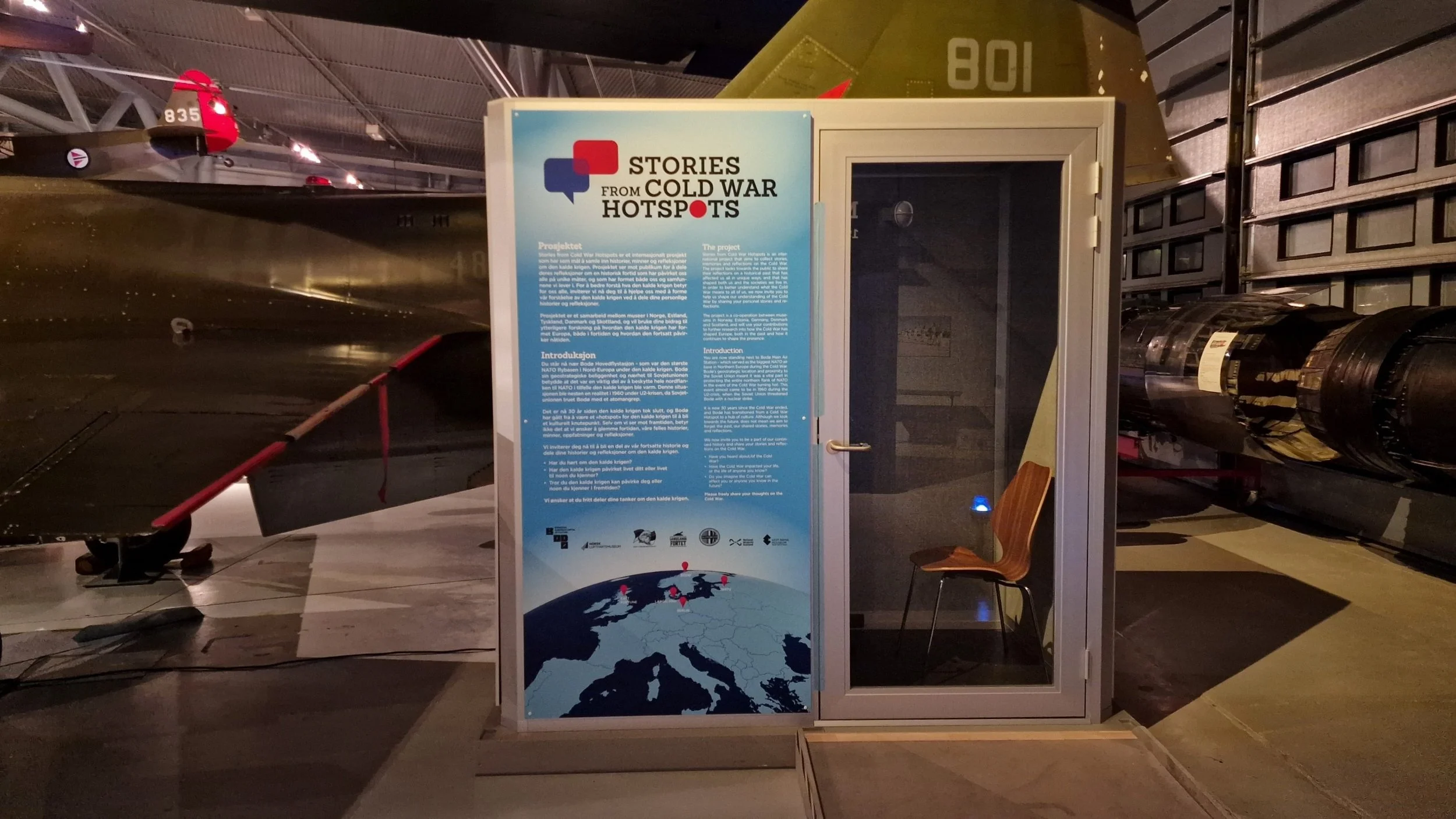
The Interview Box at the trial period in Bodø
2025 sees the end of a successful cooperation project on visitor reflections on the Cold War, between 6 North-European Museums in 5 countries.
Generously supported by Bodø2024, the secretariat for the 2024 Cultural Capital of Bodø, Norwegian Aviation Museum initiated and developed the museum cooperation project ‘Stories from Cold War Hotspots’.
‘Stories’ was about engaging in dialog with museum visitors at museums and places strongly affected by the Cold War, in order to find out if and how the Cold War has affected them and society in general.
Since its opening in 1994, the Cold War has remained an important part of the Norwegian Aviation Museum curriculum. Norway’s strategic geopolitical location since 1945 led to the development of a large US- and NATO-supported Air Defence Force and wide-ranging civil air network in Northern Norway. The Cold War has been a central part of Norwegian aviation history, and as a major military city and command and control center and a ‘hotspot’ during tense episodes like the U-2 Incident of 1960, this conflict has shaped Bodø in important ways. The Cold War is therefore an important topic in the collections, research, exhibitions and educational programs of Norwegian Aviation Museum.
The Cultural Capital Year of 2024 gave us the opportunity to dig a little deeper in a question we had asked ourselves for a long time: How do the common man and woman reflect on the Cold War? The Conflict has for good and bad been important for the development of aviation. But has it been important for the man in the street? And also: Do North-Norwegians think and reflect on the Cold War in the same ways as other Europeans? Or are there major differences across borders and regions?
A central topic for all Capitals of Culture is the European Perspective. To be a Capital of Culture means not only to focus inwardly, but to see ourselves in a greater European perspective. This was perfect also for another of our museum interests: The development of Norwegian aviation in comparison to our neighbours. The Cold War is interesting not only as it impacts Norwegian aviation, but as a major common European impact factor. It shaped all of Europe during several decades. It united us in common fear of nuclear war and through the development of supra-national alliances and cooperations. But it also divided us right through our geographical middle, physically and spiritually.
We reached out to museums in four other countries in Northern Europe with an invitation to cooperate on interviewing museum visitors about their thoughts and reflections on the Cold War. We asked museums which all have an interest in this conflict and an interest in similar insigths into their own visitors reflections. They all responded enthusiastically! So the museums participating was these:
The Estonian National Museum in Tartu (Eesti Rahva Muuseum)
The Estonian Aviationa Museum in Tartu (Eesti Lennundusmuuseum)
The Cold War Museum Langelandsfort at Langeland, Denmark (Koldkrigsmuseet Langelandsfort)
The Allied Museum in Berlin (AlliiertenMuseum)
National Museum of Flight in East Fortune, Scotland
Norwegian Aviation Museum in Bodø (Norsk Luftfartsmuseum)
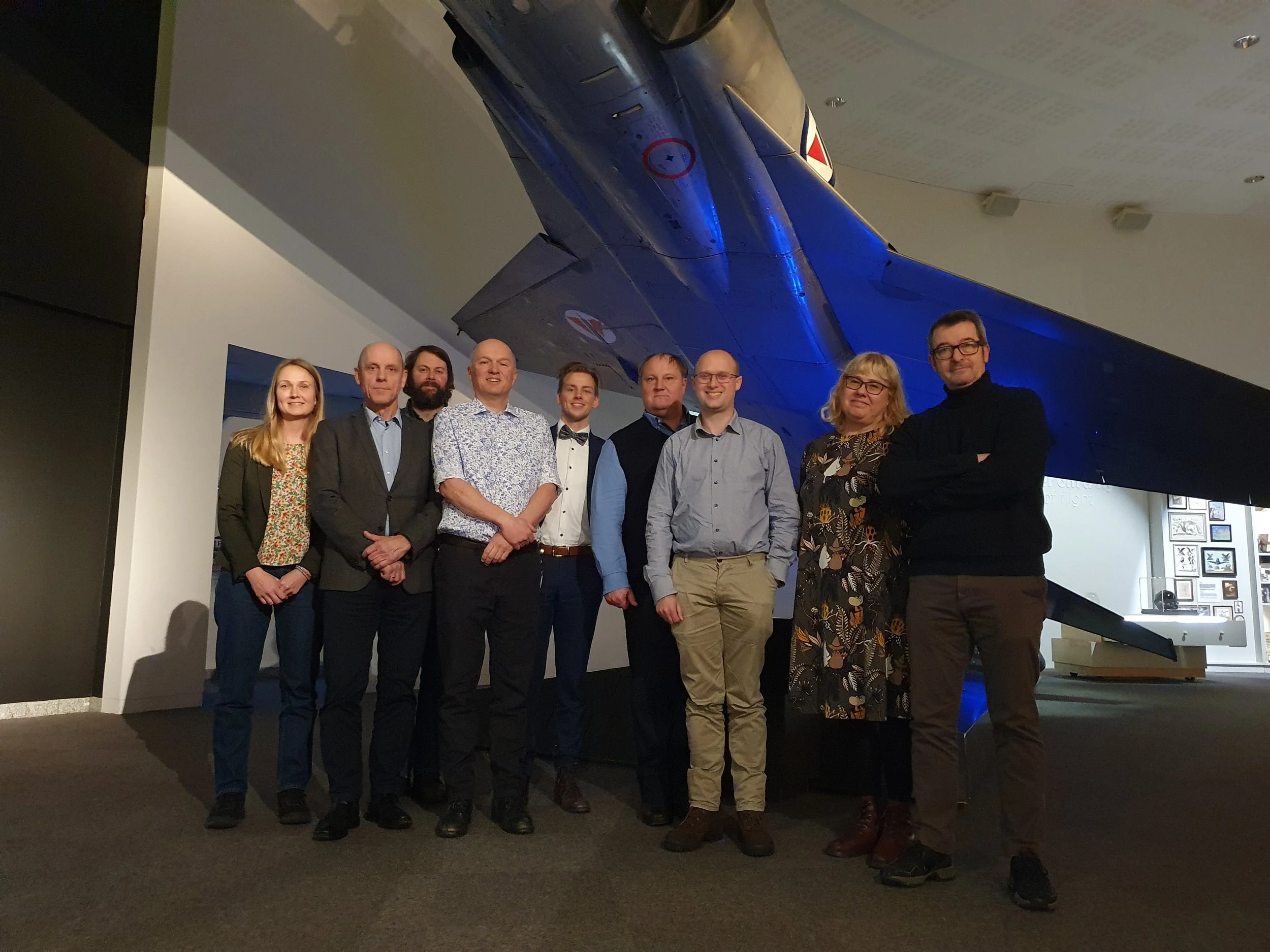
Museum Partners
Together with our partner museums and with software company Iteams in Tromsø we developed an innovative interview methodology aimed a giving our informants a possibility to reflect freely on their own recollections of the Cold War – their own stories, memories and viewpoints – as little as possibly influenced by us as interviewers. Inspired by the methodology Stavanger Art Museum in 2010 called ‘Kunst-O-Meter’, we developed a mobile, soundproof “confession box” where museum visitors could enter and freely share their thoughts on the Cold War. There were no limits on what they could talk about or specific questions we sought the answers to. Except that we asked them to reflect on whether the Cold War in any way had affected them. All stories and reflections were equally important, as they all provided us new knowledge on the topic. And quite often on themes and viewpoints which were new to us.
We transported the box between the partner museums in 2023 and collected 300 interviews. They all gave us a long range of interesting connections between the Cold War, its influence on identity and society and how the Cold War had so many similarities across borders. But also many unique differences and realities.
The major finds were presented in a temporary exhibition at the Norwegian Aviation Museum from early Summer 2024 to late Spring 2025. It saw several thousands of visitors, both locals and tourists. The exhibition can also be visited at the museum webpages: Stories from Cold War Hotspots. All the interviews are also available to watch all over the world through the collection portal of Norwegian Museums: Digitalt Museum. We have provided all the interviews with English subtitles. The physical exhibition was also presented at key spots around the town of Bodø.
Developing greater bonds between museums of similar interests was an important goal, and in this the project had immense success. In addition to the practical cooperation in collecting the interviews, the six museums engaged in regular digital and physical cooperation. In June 2024, Norwegian Aviation Museum organized a scientific conference where all partners museums and many other historians and museum professional participated to discuss the impact of the Cold War on identity and society.
In September 2024, Estonian National Museum organized a conference on similar topics, but with a special focus on the unique Cold War history of Tartu and the Raadi Airfield. During this conference, the participants were also able to witness the National Museums extensive collections and exhibitions on Cold War related objects and interviews. The National Museum in Tartu at the same time participated in other projects and conferences on similar Cold War-related topics. It’s interview-collections and experiences are some of the most extensive in Europe.
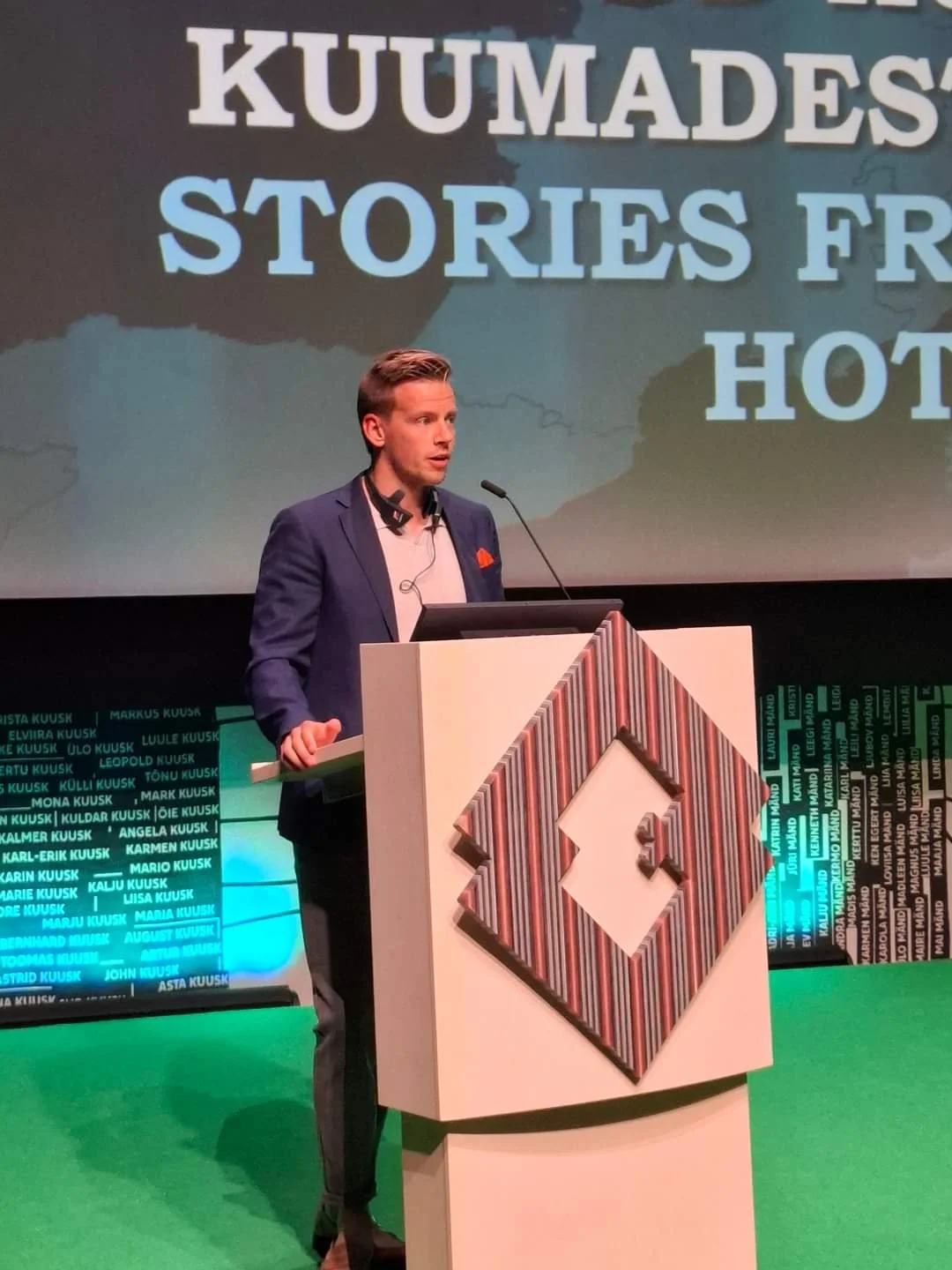
Project Manager Tobias Henriksen at the Tartu conference
The main yearly event at the Estonian Aviation Museum is its large Air Show which attracts thousands of visitors from all over the Baltics. At the 2023 Air Show, the museum presented Cold War-related artifacts and exhibition materials to support the interview collection.
The Allied Museum in Berlin created a special Cold War exhibition on Cold War Games together with the Berlin Computer Games Museum in 2025, inspired by the output from the ‘Stories’-project. In 2026, the ‘Stories’-project will also be presented outdoors at the Allied Museum. The project wrap-up-meeting was held at the Allied Museum in the late spring 2025.
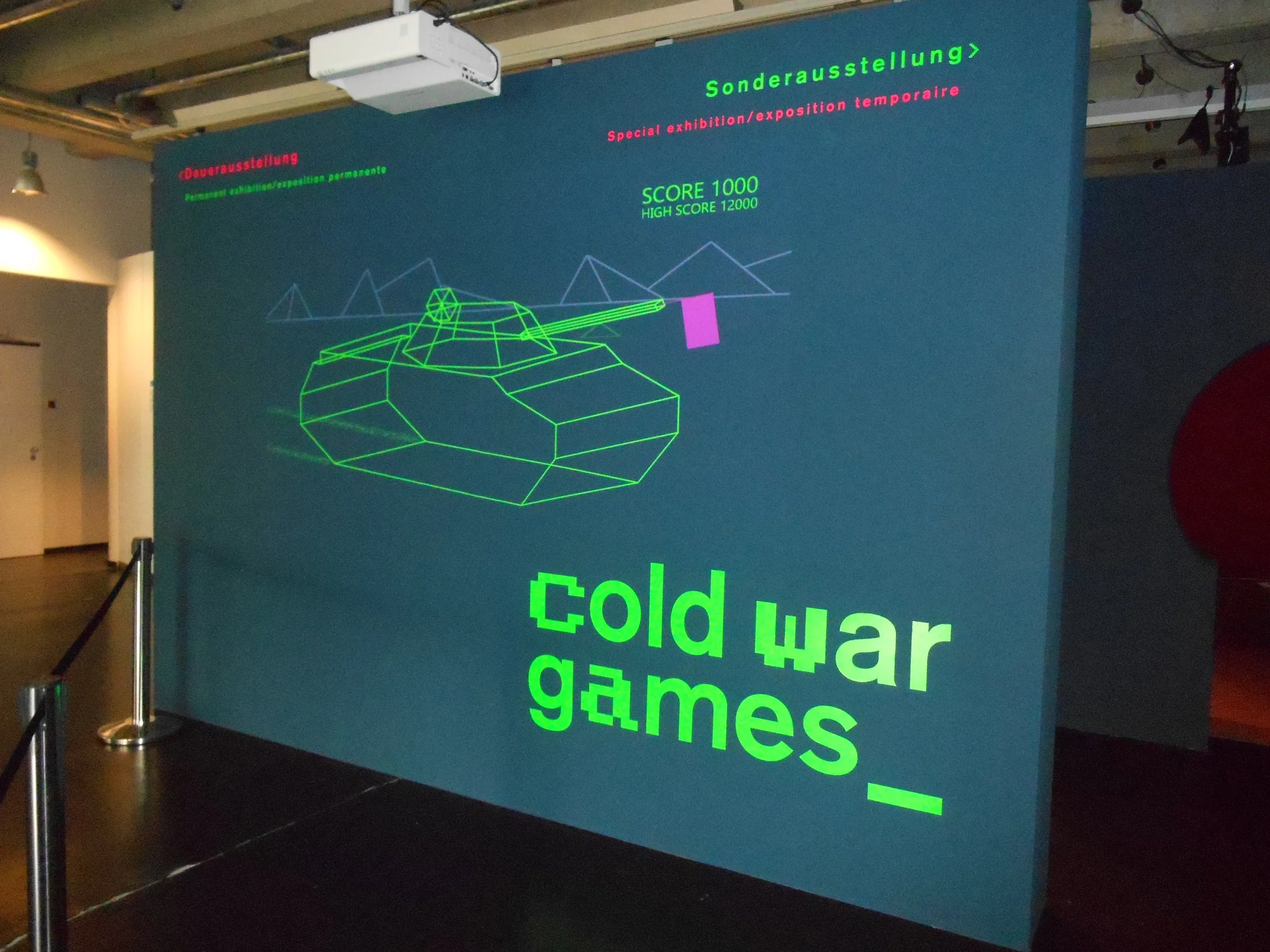
Cold War Games at Allied Museum Berlin
Starting the year before the ‘Stories’-project, National Museums Scotland, of which the National Museum of Flight is a part, together with Stirling University and several museum partners started a large museum study project called ‘Materialising the Cold War’. The ‘Stories’-project benefitted greatly by the cooperation with several of the museums participating in the ‘Materialising’ project alongside the ‘Stories’-project.
Cold War Museum Langelandsfort was also a valuable partner with extensive Cold War collections and an enthusiastic visitor group. More than a third of the interviews in the project was collected at Langeland!
Norwegian Aviation Museum is grateful for the opportunity to engage with our partner museums, visitors, Bodø2024 and fellow historians and museum professionals on this project! It has given us new insights into the Cold War, new ways of engaging with our visitors and deeper connections with fellow museums. We hope this may contribute to raised awareness of and understanding for our common European heritage. Something which we in these troubled times perceive as particularly relevant.
Karl L. Kleve
Curator
Norwegian Aviation Museum